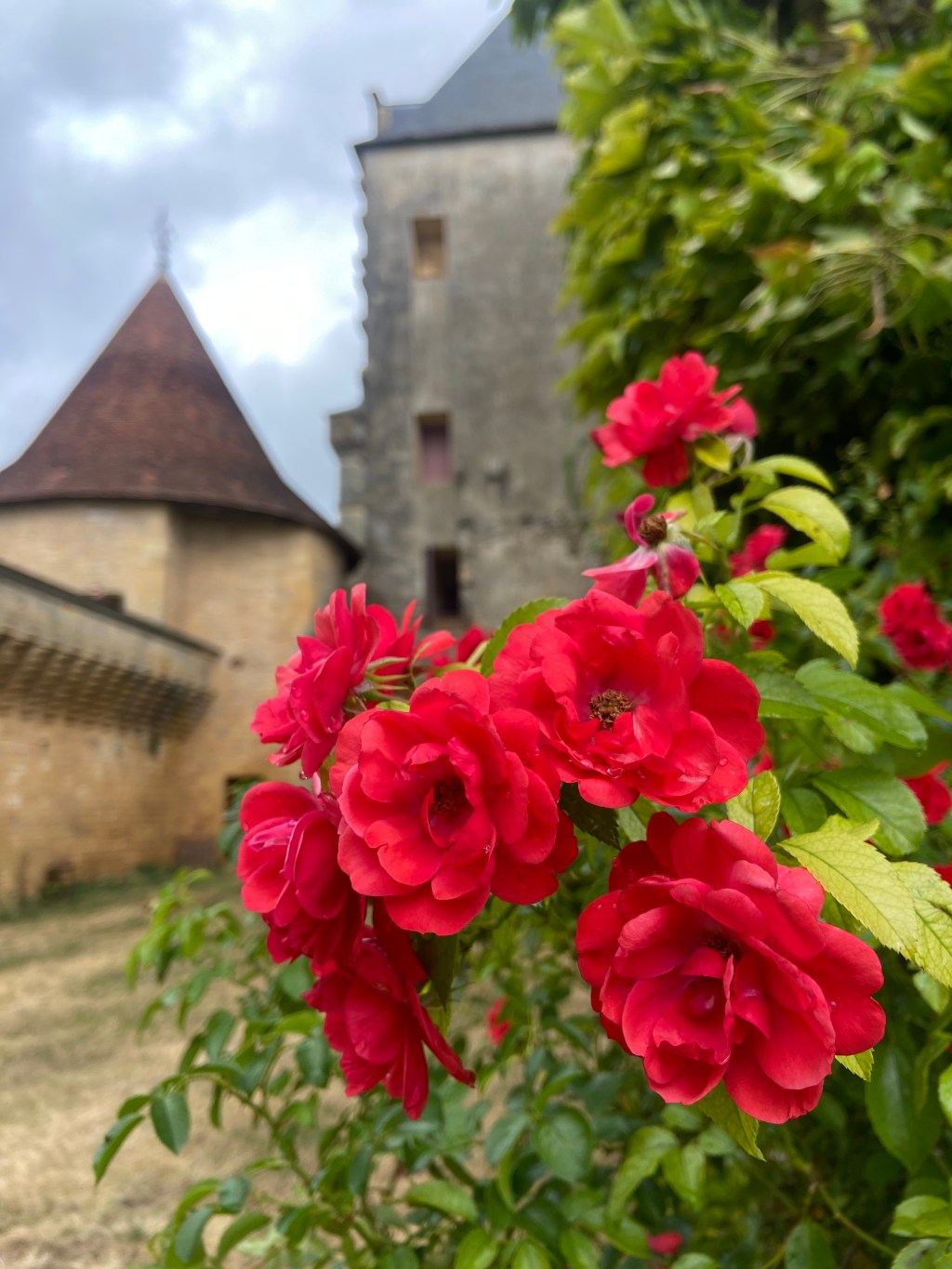
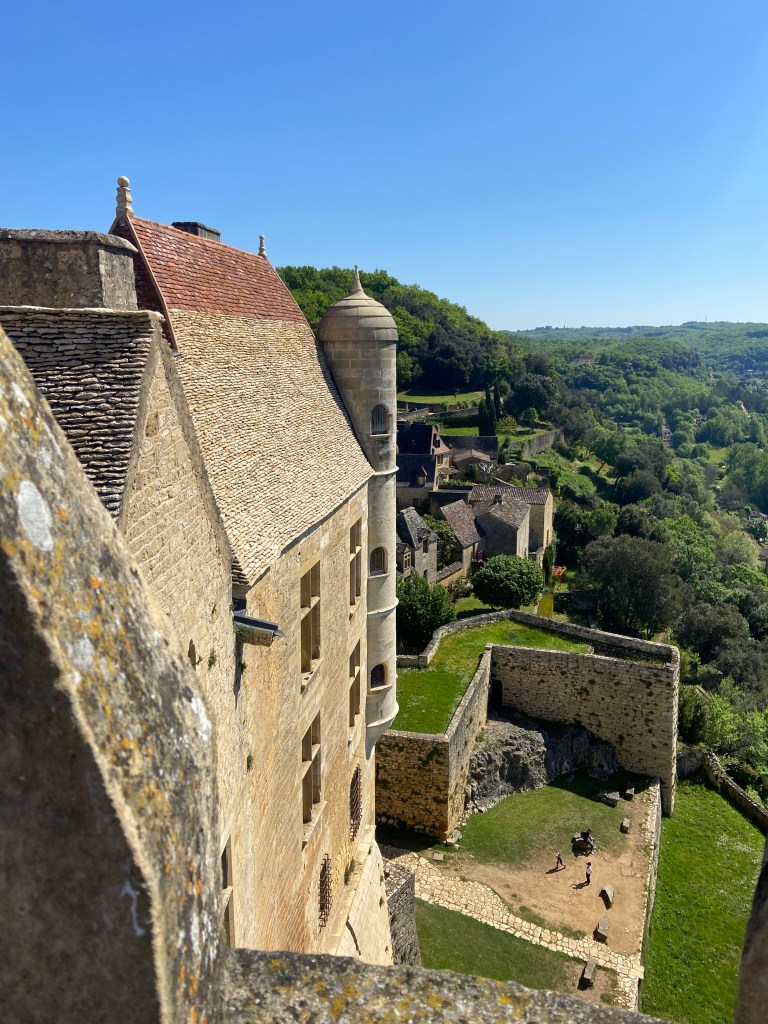
If you only visit one castle in the Dordogne, make it Beynac. A 12th-century fortress on a sheer cliff 150 metres above the river, looking exactly like a castle should look.
The History
The barons of Beynac built the castle in the 12th century to control the Dordogne river below. Anyone transporting goods along the river had to pay the lord of Beynac for the privilege, which made the family very rich and very unpopular.
When Eleanor of Aquitaine married Henry Plantagenet — who then became Henry II of England — the whole of Aquitaine, including Beynac, became English territory. This kicked off centuries of back-and-forth between the English and French crowns in this part of France. Richard the Lionheart himself took the castle by scaling the cliff, though he didn’t hold it long before getting himself killed at a siege nearby.
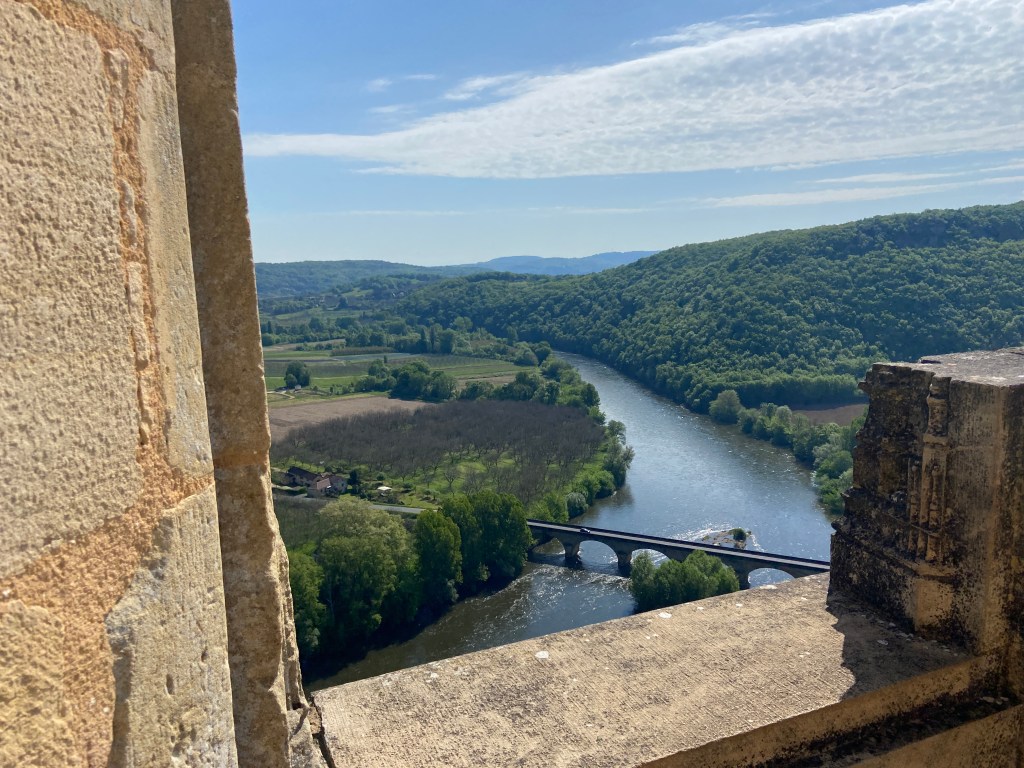
During the Hundred Years’ War, the Dordogne river served as the border between English and French territory. Beynac was held by the French. Directly across the river, the Château de Castelnaud was held by the English. The two fortresses stared each other down for a hundred years. You can still see Castelnaud from Beynac’s terrace, which makes the whole rivalry very real.
The war ended in 1453 when the French won at Castillon near Bordeaux, and the English went home for good. After that, Beynac was one of the four baronies of Périgord, and its lords met in the castle’s States’ Hall to decide the fate of the region.
The View
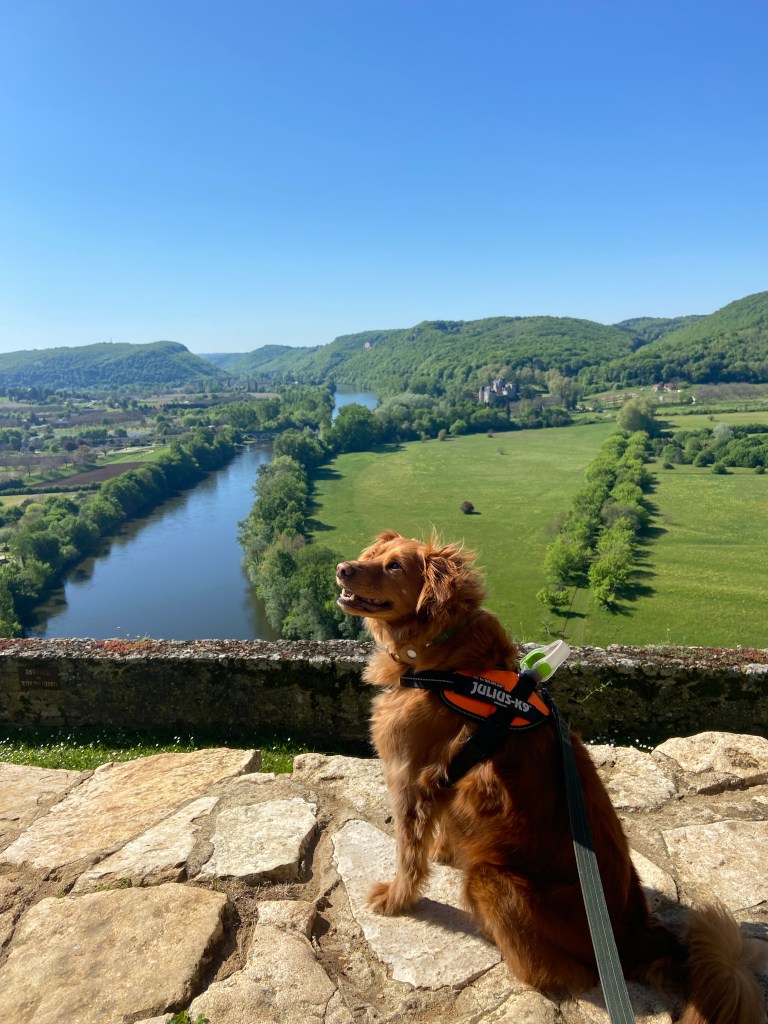
The view from the terrace is incredible. You look straight down the Dordogne valley and can see four other castles — Castelnaud, Fayrac, Marqueyssac, and Milandes — plus the river curving through farmland and forest below. It’s one of the best views in southwest France, full stop.
Dogs Welcome
Beynac allows dogs inside the castle, on a lead — both indoors and outdoors. This is rare for a French château and worth knowing if you travel with a dog – our dog Archie had a lovely time!
If You Go
- Open: Year-round, every day. 10am–7pm (longer hours in summer).
- Getting there: Park at the top of the village (1 min walk to entrance) or at the bottom by the river (steep 10–15 min walk up through the village, but beautiful).
- Time needed: About an hour for the castle. Add more for the village.
- The village: Beynac-et-Cazenac is classified as one of the most beautiful villages in France. Ochre stone houses, narrow lanes, good restaurants by the river.
- Combine with: Castelnaud (10 min drive), Milandes (10 min), La Roque-Gageac (5 min), or a canoe trip on the Dordogne.